AirMirror: TV Cast & Mirror
- 4.3
- Rating
- 5.00M
- Installs
- Free
- Price

 Analysis by App-foxy
I installed AirMirror: TV Cast via AirPlay because I wanted a simple way to move video from a phone to an Android TV without replacing the television or juggling several companion apps. It is a free video player and editing app from BoostVision, although optional in-app purchases range from $1.99 to $10.99 per item. My first impression was that it is less about editing video and more about creating a bridge between a mobile device and an Android TV. That distinction matters, because the app makes sense when your starting point is a phone and your destination is a larger screen.
The app has a 4.4 average from around 16 thousand ratings, has passed one million installs, and is marked suitable for Everyone. Those figures suggest that the basic idea is easy for many people to understand: open the app, find the television, and send content across. In daily use, though, the quality of the experience depends heavily on the handoff between phone, app, network, and TV. I found the best results came from treating it as a focused casting tool rather than expecting it to replace every native streaming app.
From a phone video to the living-room screen
I find the most helpful way to judge this setup is to watch how the handoff feels from the moment the TV is ready, rather than focusing only on the final picture. A quick check that the receiver is open and the phone is on the home network can save repeated attempts and make any delay easier to diagnose. That practical starting point leads naturally to the choices involved in getting content onto the screen.
You May Also Like

 Blood Strike: 2.5 Anniversary
Blood Strike’s Loadouts Turn Every Drop Into a Tactical Gamble
A close look at Blood Strike’s custom loadouts: how fast access to signature weapons reshapes its battle royale rhythm, rewards preparation, and narrows the gap between fights.

 Pandora - Music & Podcasts
Pandora’s Music Is Easy to Start, but Harder to Recover
Pandora’s strength is its low-effort path from a seed to a station. Its weak spot is how much confidence it asks you to place in connection, setup, and quiet recovery.

 8 Ball Pool
 Is Built on Rivalries, Rematches, and Routine
A close look at the rivalries, rematches, shared routines, and unanswered safety questions that turn a quick pool match into a persistent mobile community.

 Samsung Music
’s Quiet Strength Is Playing What You Already Own
Its reach comes less from spectacle than from dependable access to a personal library. That simplicity is both the app’s strongest retention engine and its ceiling.

 AccuWeather: Weather Radar
AccuWeather Review: A Quick, Clear Forecast for Everyday Decisions
For everyday plans, the best forecast is the one you can understand quickly. AccuWeather makes rain timing, radar, and local conditions easy to act on, with a few trade-offs.

 Hill Climb Racing
Why Hill Climb Racing Still Turns Crashes Into One More Run
A tiny car, a bumpy hill and one more upgrade: Hill Climb Racing keeps resurfacing because its simple chaos makes every near-miss feel personal.
More From Our News Desk



The starting condition: a phone, an Android TV, and a reason to cast
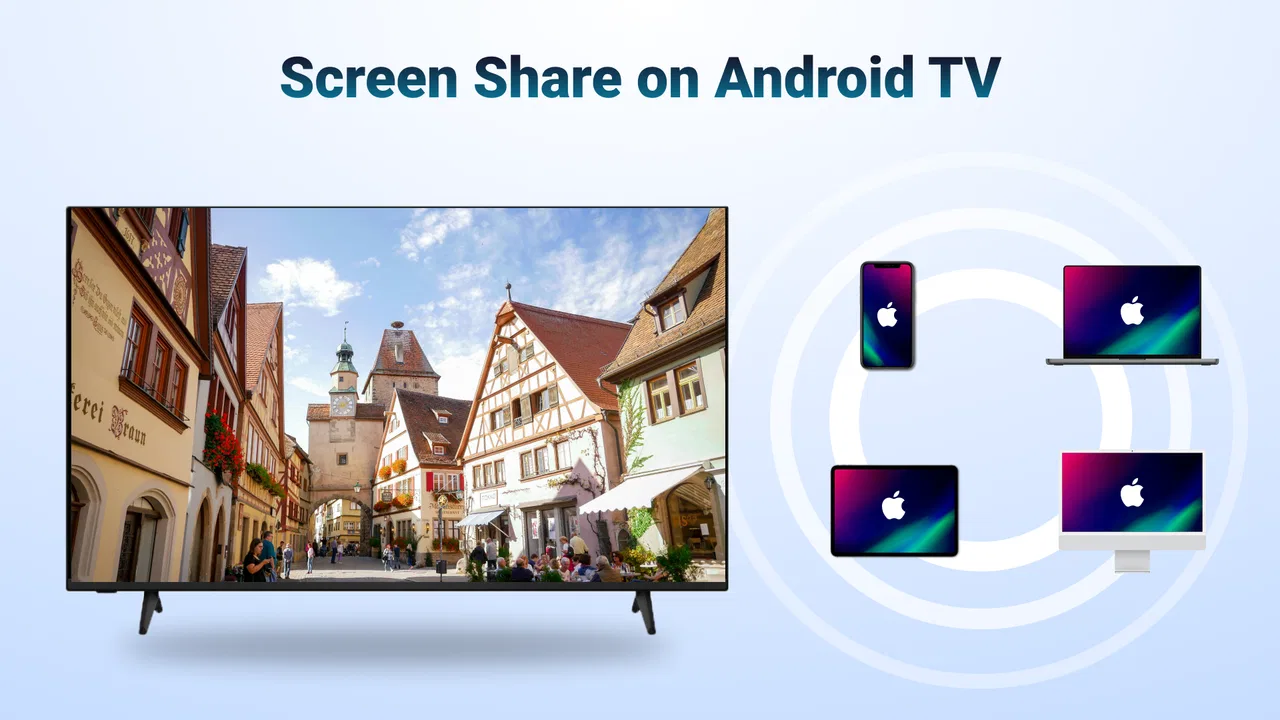
A realistic use case is a family member finding a web video on a phone and wanting everyone to watch it from the sofa. Holding the phone up for several minutes is uncomfortable, while passing the device around makes the viewing experience feel improvised. AirMirror Receiver is designed for that exact gap. Its store summary describes screen mirroring and web-video casting to Android TV through AirPlay, so the central workflow begins with content already available on the mobile device.
I also see value in situations where the television has a larger, brighter display but the content is easier to discover on a phone. Searching, opening a browser page, or choosing a clip can be quicker on a touchscreen than with a television remote. The phone becomes the selection and control surface, while the TV becomes the viewing surface. That division is the app’s most useful idea.
Before starting, I would check that the phone and television are ready to communicate on the same home network. I would also wake the TV, switch it to the relevant receiver screen, and keep the phone nearby. These small preparations reduce the most common source of confusion: trying to cast while one device is asleep, disconnected, or waiting in another input mode.
Step one: open the receiver before searching for content
The smoothest order is to prepare the receiving side first. I open the receiver on the Android TV, then launch the mobile casting workflow. This gives the phone a better chance of finding the intended screen immediately. Starting with a video and only later looking for a receiver can create an unnecessary pause, especially when several compatible devices are visible in the home.
This is one of the practical habits I would recommend to a first-time user: do not treat discovery as an afterthought. The television is not just a passive display in this setup. It is the endpoint that must be available when the phone begins the handoff. If the TV is ready first, the rest of the process feels much more deliberate.
Step two: choose between mirroring and sending a web video
There are two different jobs here, and they should not be confused. Screen mirroring is useful when I need the television to reflect what is happening on the phone, such as moving between pages or showing a sequence that is not available as a direct cast. Casting a web video is better when my goal is simply to watch one clip on the larger display without exposing every phone notification, tap, or change of screen.
My practical rule is simple: mirror for interaction, cast for viewing. If I am demonstrating a website or walking someone through a visual process, mirroring makes sense. If I have already found a video and want to sit back, sending the video is the cleaner choice. This distinction also helps avoid the disappointment of using full mirroring when a more focused handoff would have been enough.
Step three: make the handoff from phone to TV
Once the receiver is available, I select the target Android TV and begin the transfer. The phone remains important during this stage because it is where I found the content and where I expect to manage the session. The television’s role is to accept the connection and display the result. That division is convenient, but it also means the phone cannot be treated as irrelevant after the first tap.
For a web video, I would avoid switching between several unrelated pages while the connection is being established. A stable starting page makes it easier to tell whether a problem comes from the receiver, the network, or the particular video. This is a small troubleshooting advantage: change one thing at a time instead of restarting the entire setup without knowing what failed.
The app’s current version is 1.4.8 and it requires Android 6.0 or later. That broad operating-system requirement makes it approachable for people using older Android hardware, but compatibility is not the same as a guaranteed identical experience on every television. The receiver environment, network arrangement, and source page still influence how dependable the handoff feels.
What happens after the handoff
When the connection works, the benefit is immediate. The phone stops being the only place where the video can be enjoyed, and the TV takes over the visual experience. I can put the mobile device down instead of keeping it raised, and other people in the room can watch without crowding around a small display.
For a casual evening, this is enough. I might find a short cooking clip, send it to the television, and keep the phone available for the recipe without forcing everyone to watch over my shoulder. For a presentation-like situation, mirroring can make the phone a portable source of images or pages. The app is most convincing when the content begins on mobile and the desired outcome is a shared screen.
Managing the two-device relationship
The handoff is not completely invisible. The phone and TV continue to have separate responsibilities, and users should remember which device is doing what. If the phone is the source of the video, changing the source or leaving the relevant page may affect the session. If the TV is the receiver, its availability determines whether the phone can complete the connection.
This is where the app differs from opening a native streaming app directly on Android TV. A native TV app usually keeps discovery, playback, and display in one place. AirMirror is more flexible for content that begins elsewhere, but it introduces an extra relationship between devices. That trade-off is worthwhile for web-based material and less attractive when the same service already has an excellent television app.
Why web-video casting can be more comfortable than mirroring
Full-screen mirroring can expose everything on the phone, including accidental taps, rotation changes, and incoming interruptions. For private browsing or quick demonstrations, that may be acceptable. For group viewing, sending the web video itself is preferable because the audience sees the intended content rather than the entire path used to reach it.
This is also a useful privacy habit. I would prepare the video before connecting whenever possible, then choose the narrowest sharing mode that accomplishes the task. The app’s value is not only that it enlarges content; it lets me decide whether the TV should receive a complete copy of the phone’s screen or a more focused video experience.
Where the workflow breaks
The first weak point is device discovery. If the TV does not appear, repeatedly tapping the cast control is unlikely to solve the underlying issue. I would first confirm that the receiver is open, both devices are on the same network, and the intended TV is awake. If other household devices are visible, selecting the correct endpoint becomes especially important.
The second weak point is the source itself. A web video can behave differently from a locally stored clip or a video inside a dedicated streaming service. Pages may load slowly, controls may be designed for touch rather than a television, and the source may not behave consistently when transferred. AirMirror can provide the bridge, but it cannot make every web page feel like a purpose-built TV application.
The third weak point is the difference between a successful connection and a pleasant viewing session. A mirrored image may appear, yet the experience can still feel awkward if the phone must remain active for every interaction. For short clips this is fine. For long viewing sessions, I would prefer a native TV app whenever one is available and supports the same content.
Another friction point is troubleshooting. With a direct TV app, there is usually one device to inspect. Here, I have to consider the phone, the receiver, the network, and the source page. That does not make AirMirror difficult, but it does make it less suitable for someone who wants a completely automatic experience. The app rewards a little patience and a clear sequence of checks.
How it compares with the usual alternatives
Compared with a built-in casting button inside a streaming service, AirMirror is broader in concept because it starts with the phone and can address screen mirroring as well as web-video casting. Built-in casting is usually better when the service supports it directly, since the television can often handle playback more independently. AirMirror becomes more useful when the content does not have a convenient TV equivalent or when the phone is the natural place to browse.
Compared with a physical cable, the app is more comfortable for a living-room workflow because there is no cable running from the sofa to the television. A cable can still be the better choice for a highly controlled presentation or when wireless discovery is unreliable. The choice depends on whether convenience or predictable connection behavior matters more for the task.
Compared with mirroring tools built into a phone’s operating system, AirMirror offers a dedicated route toward an Android TV receiver. The advantage is a focused workflow; the compromise is another app to understand and another receiver relationship to maintain. I would choose it when the TV endpoint is central to the plan, not simply because the app exists as an alternative to every built-in option.
Who should use it and who should skip it
I recommend it to people who often discover videos on a phone but watch them with others on an Android TV. It is also a sensible option for households where the phone is the easiest browsing device and the television is the best display. Users who need occasional mirroring for a demonstration may appreciate having that path available alongside web-video casting.
I would be more cautious if your main activity is watching established streaming platforms that already run natively on the television. In that case, the direct TV app is generally simpler, and the phone-to-TV handoff adds little. I would also skip this approach if you need a guaranteed, interruption-free presentation and cannot spend time checking the connection beforehand. A wired setup or a dedicated native app may be a better fit for those priorities.
My verdict after following the complete workflow
AirMirror: TV Cast via AirPlay succeeds when its role is clear: it moves a phone-centered viewing experience onto an Android TV. I like the separation between choosing content on the phone and watching it on the larger screen, and I find the option to mirror or focus on a web video genuinely useful. The free entry point makes it easy to try, while BoostVision’s app sits in a practical category rather than trying to be an all-purpose entertainment platform.
Its limitations are equally clear. The experience depends on a clean receiver handoff, a cooperative network, and a source that behaves well outside the phone. It is not automatically better than native casting, and it does not remove the need to understand which device is acting as source and which is acting as receiver. Once I accepted that extra step, the workflow became predictable.
For me, the deciding question is where the content starts. If it starts on the phone and needs to end on the Android TV, this app is a useful bridge. If it already starts and ends inside a television app, I would use the native option instead. That makes AirMirror a targeted recommendation rather than a universal one, but for the right everyday scenario, it turns a small phone screen into a much more comfortable shared viewing experience.
FAQs for AirMirror: TV Cast & Mirror
01What is AirMirror: TV Cast via AirPlay, and how does it work?
AirMirror: TV Cast via AirPlay is an application that allows users to mirror their device’s screen to a TV using AirPlay technology. It works by connecting your smartphone or tablet to a compatible smart TV over a Wi-Fi network, enabling you to stream videos, display photos, and showcase apps on a larger screen seamlessly.
02Is AirMirror: TV Cast via AirPlay compatible with all devices?
AirMirror is designed to work with iOS devices and AirPlay-enabled televisions or streaming devices. For Android users, compatibility may vary depending on the device and the TV's capabilities. It’s important to check the app’s specifications and ensure that your devices support AirPlay before downloading.
03What are the main features of AirMirror: TV Cast via AirPlay?
AirMirror offers a variety of features including high-definition screen mirroring, video streaming, and photo casting. It supports multiple file formats and offers a user-friendly interface for easy navigation. The app also provides real-time streaming with minimal latency, making it ideal for presentations and media playback.
04Are there any costs associated with using AirMirror: TV Cast via AirPlay?
While AirMirror offers a free version with basic features, there might be in-app purchases or subscription options for advanced functionalities. These can include enhanced streaming quality, ad-free experience, and additional support features. It’s advisable to review the app’s pricing model in the app store before downloading.
05What are some common issues users might face with AirMirror: TV Cast via AirPlay?
Users might experience connectivity issues if the devices are not on the same Wi-Fi network or if there are compatibility problems with the TV. Additionally, there might be occasional latency or quality drops during streaming. Updating the app and ensuring all devices have the latest firmware can help mitigate these issues.
Pros
- Easy setup and connection process.
- Supports multiple device mirroring.
- High-quality video streaming.
- User-friendly interface.
- Works with numerous TV brands.
Cons
- Limited features in free version.
- Occasional connectivity issues.
- Lag on older devices.
- Requires stable Wi-Fi connection.
- Ads can be intrusive.

AirMirror: TV Cast & Mirror
Gallery